
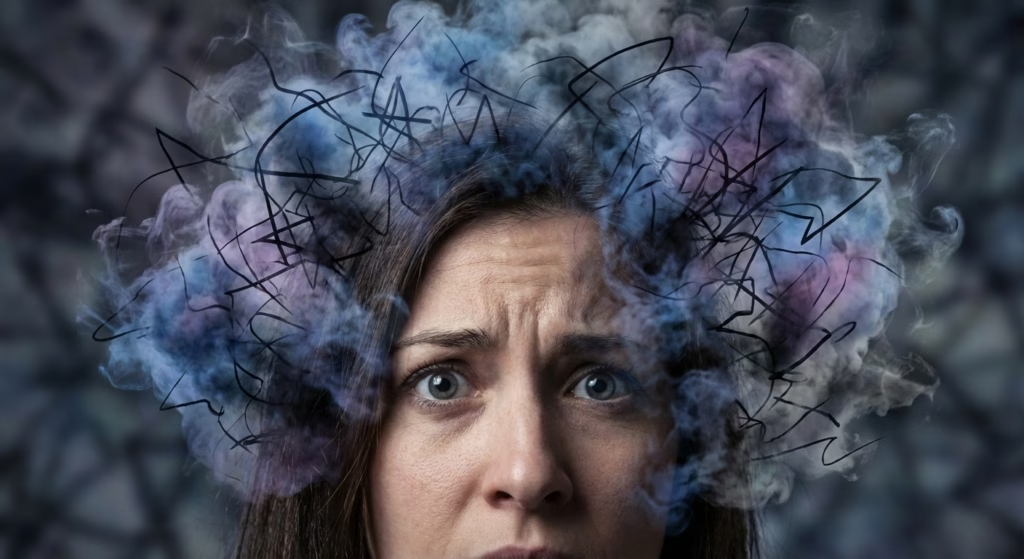
Anxiety is not a flaw or a weakness. Psychology explains anxiety as a natural response designed to protect. When the mind senses potential danger, it prepares the body to respond. This response once helped humans survive real threats.
In modern life the threats are often social emotional or imagined. The same protective system activates even when danger is uncertain or distant.
The Brain Learns to Anticipate Threat
Anxiety develops when the brain becomes focused on what might go wrong. Areas involved in detecting danger become highly sensitive. The mind scans for risk and tries to predict outcomes.
Psychology shows that anxious thinking often lives in the future. The mind attempts to prevent harm by imagining possibilities. This constant anticipation creates tension rather than relief.
Thoughts Fuel Anxiety
Thoughts play a central role in anxiety. Repeated worries assumptions and worst case scenarios reinforce anxious feelings. The mind treats these thoughts as signals rather than guesses.
Psychology explains that anxious thoughts feel urgent and convincing. This makes them hard to dismiss. Recognizing thoughts as mental events rather than facts helps reduce their power.
The Body Reacts With the Mind
Anxiety affects both mind and body. Physical sensations like a racing heart shallow breathing or tight muscles are part of the response.
Psychology shows that the body reacts before conscious thought. These sensations can then increase worry which strengthens the cycle. Understanding this loop helps reduce fear of physical symptoms.
Anxiety Grows From Experience
Past experiences influence anxiety. Stressful or unpredictable events teach the brain to stay alert. The mind learns patterns and applies them broadly.
Psychology emphasizes that anxiety often reflects learned protection. The mind remembers what felt unsafe and tries to avoid repeating that pain.
Control Feels Important to the Anxious Mind
Anxiety often increases when situations feel uncontrollable. The mind searches for certainty and reassurance. When certainty is unavailable anxiety rises.
Psychology explains that attempts to control every outcome can increase anxiety rather than reduce it. Learning to tolerate uncertainty helps calm the system over time.
Anxiety Affects Focus and Decision Making
Anxiety narrows attention. The mind fixates on potential problems while ignoring neutral or positive information. Decision making becomes harder because every choice feels risky.
Psychology shows that anxious minds prioritize safety over creativity. This protects but also limits growth when anxiety remains unchecked.
Avoidance Feeds Anxiety
Avoidance brings short term relief. Skipping a feared situation reduces discomfort briefly. Over time avoidance teaches the brain that the situation was dangerous.
Psychology explains that avoidance strengthens anxiety by preventing new learning. Facing fears gradually helps the mind update its expectations.
Anxiety Exists on a Spectrum
Anxiety varies from mild worry to overwhelming distress. Everyone experiences anxiety at times. It becomes a problem when it interferes with daily life.
Psychology views anxiety as a spectrum rather than a label. Understanding where it falls helps guide compassionate responses rather than judgment.
Understanding Anxiety Builds Self Compassion
Understanding the psychology of anxiety replaces self criticism with empathy. Anxiety is a signal not a personal failure. It shows a mind trying to protect against perceived harm.
Psychology encourages gentle awareness. When anxiety is met with understanding rather than resistance it often softens. With patience support and practice the mind can learn new ways to feel safe again.