
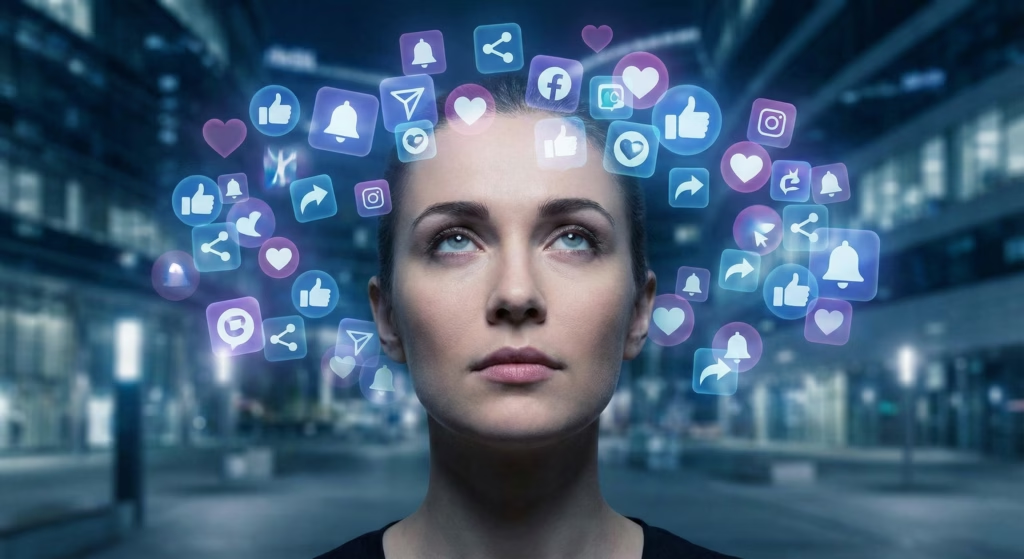
Social media has become so woven into daily life that it often feels invisible. You reach for your phone without thinking. You scroll while waiting, resting, or avoiding a difficult moment. Psychology looks closely at this habit not to judge it but to understand it. Social media is not just a tool. It is an environment, and environments shape the mind.
The human brain evolved for connection. Thousands of years ago survival depended on staying close to others, reading social cues, and maintaining belonging. Social media taps directly into this ancient wiring. Likes comments messages and notifications act as signals of social presence. Each one tells the brain you are seen, noticed, or included. That feeling can be comforting and energizing.
At the same time the brain was never designed to process this much social information. In the past you interacted with a small group of people. Today the mind is exposed to hundreds or thousands of lives every day. Psychology shows that the brain does not easily distinguish between meaningful connection and symbolic interaction. A notification can trigger the same emotional response as a real conversation.
One of the strongest effects of social media is on attention. Platforms are designed to capture and hold focus. Endless scrolling removes natural stopping points. The brain stays in a state of anticipation, waiting for the next interesting image or message. This constant stimulation trains attention to jump quickly rather than settle deeply. Over time it can become harder to focus on tasks that require patience or sustained effort.
Dopamine plays a central role here. Dopamine is not the pleasure chemical as many people think. It is the anticipation chemical. Each scroll promises something new. The brain releases dopamine in response to that promise. This creates a loop of seeking rather than satisfaction. You keep scrolling not because you are enjoying it but because your brain is expecting something rewarding.
Emotionally social media creates a mixed experience. It can bring joy connection humor and inspiration. It can also increase anxiety sadness and self doubt. Psychology explains this through comparison. When you see others sharing achievements happiness or beauty the mind automatically compares. Even when you know logically that these images are curated the emotional brain reacts as if they represent reality.
Comparison affects self esteem deeply. If you already feel uncertain about yourself social media can amplify that feeling. Each post becomes a silent measurement. Am I doing enough? Am I happy enough? Am I attractive enough? These questions often arise without conscious awareness. The mind absorbs the comparison quietly and draws conclusions about worth.
Social media also affects identity. People begin to see themselves through the lens of how they are perceived online. Posts are crafted with an imagined audience in mind. Over time this can blur the line between authentic expression and performance. The mind may start asking what will be liked rather than what feels true.
For adolescents and young adults this effect can be especially strong. Identity development is already a sensitive process. External feedback becomes a powerful mirror. Psychology shows that constant evaluation during this stage can increase vulnerability to anxiety and low self esteem. The brain is still learning how to regulate emotion and interpret social cues.
The fear of missing out is another common effect. Seeing others socialize travel or succeed can create the sense that life is happening elsewhere. Even when you are content the image of others enjoying something can trigger restlessness. The mind interprets absence as loss. This can lead to dissatisfaction with the present moment.
Social media also influences emotional regulation. Many people turn to scrolling to distract themselves from discomfort. This can provide temporary relief. Over time the mind may rely on distraction rather than processing emotion. Psychology shows that avoiding feelings does not make them disappear. It often makes them return stronger.
Sleep is often affected as well. Screens stimulate the brain. Notifications create alertness. Scrolling late at night delays rest. Poor sleep then affects mood attention and resilience. The cycle continues as fatigue increases the desire for easy stimulation.
Despite these challenges social media is not inherently harmful. Psychology emphasizes context and use. Active engagement such as meaningful conversations sharing creativity or maintaining relationships tends to support well being more than passive scrolling. The difference lies in intention and awareness.
Connection through social media can reduce loneliness when it complements real relationships. It can provide support for people who feel isolated. It can create communities around shared interests or experiences. The mind benefits when social media strengthens genuine connection rather than replacing it.
Problems arise when quantity replaces quality. Many shallow interactions cannot meet the brain’s deeper need for belonging. The mind may feel socially full but emotionally empty. This mismatch can increase feelings of loneliness even while being constantly connected.
The pace of social media also affects how the brain processes information. Fast content encourages quick judgments. Nuance is lost. Emotional reactions become stronger and faster. Psychology shows that constant exposure to emotionally charged content can increase stress and reactivity.
News and conflict shared rapidly can overwhelm the nervous system. The brain struggles to process so much intensity. This can lead to emotional numbness or chronic anxiety. The mind needs space to integrate information. Without it emotional balance becomes harder to maintain.
Boundaries play a crucial role in protecting mental health. When social media use is intentional the brain feels more in control. When use is automatic the brain feels pulled. Control supports well being. Compulsion undermines it.
Self awareness is the most powerful tool here. Noticing how social media makes you feel provides guidance. Does scrolling leave you energized or drained? Connected or inadequate? Calm or restless? These signals matter more than time limits alone.
Psychology encourages mindful use rather than total avoidance. Social media is part of modern life. The goal is balance. Choosing when and why you engage restores agency. The mind responds positively to choice.
Offline experiences become more meaningful when attention is not constantly divided. Presence strengthens memory emotional depth and satisfaction. The brain thrives on full engagement with fewer stimuli rather than partial engagement with many.
Social media reflects human psychology rather than creating it. It magnifies tendencies that already exist. Comparison connection curiosity and validation seeking are natural human traits. Technology intensifies them. Understanding this removes blame and invites responsibility.
Parents educators and individuals all play a role in shaping healthy relationships with social media. Teaching emotional literacy critical thinking and self compassion builds resilience. The mind becomes better equipped to navigate digital spaces without losing balance.
Psychology does not view social media as good or bad. It views it as powerful. Power requires awareness. When you understand how it affects your mind you gain choice. That choice allows you to shape your experience rather than be shaped by it.
The mind is adaptable. Attention can be retrained. Self worth can be grounded internally. Connection can be deepened intentionally. Social media then becomes a tool rather than a ruler.
How social media affects the mind ultimately depends on how it is used and understood. When engagement is guided by curiosity values and self respect it can enhance life. When it is driven by habit fear or comparison it can drain it. Awareness changes the outcome. The mind does not need constant stimulation to feel alive. It needs meaning presence and genuine connection.