
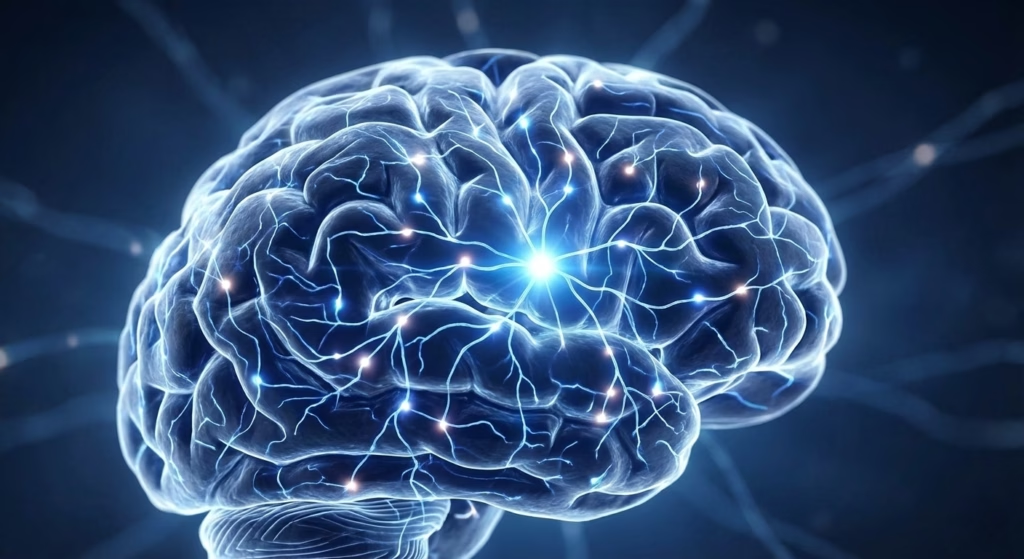
Many people imagine memory as a video camera that stores life exactly as it happens. Psychology shows a very different picture. Memory is more like a story that the brain rebuilds each time it is recalled. Details shift emotions color events and meaning changes over time.
The brain does not store everything. It selects what seems important and lets the rest fade. This selectivity helps the mind function without overload but it also means memory is flexible rather than precise.
Memory Begins With Attention
Memory starts with attention. If something does not capture focus it rarely becomes a memory. The brain needs a reason to store information. Emotion novelty and relevance all increase the chance that a moment will be remembered.
When attention is divided memory formation weakens. This explains why distracted moments feel blurry later. Psychology shows that presence plays a powerful role in what gets remembered.
Encoding Turns Experience Into Memory
Encoding is the process of turning experience into a mental trace. This happens when the brain connects new information to existing knowledge or emotion. Meaning strengthens memory.
A fact learned with emotion or personal relevance sticks better than one learned mechanically. Psychology highlights that understanding and engagement matter more than repetition alone.
Storage Is Dynamic Not Static
Once encoded memories are stored across networks in the brain. Storage is not a single location. Different parts of a memory such as sights sounds and feelings live in different areas.
Over time memories change. Each recall slightly reshapes the memory. New information blends with old memory making it more current but less exact. This process helps learning but also explains why memories can feel unreliable.
Recall Rebuilds the Past
Recall is not retrieval of a fixed file. It is reconstruction. The brain fills in gaps using current beliefs emotions and context. What feels like remembering is actually recreating.
Psychology explains that confidence in a memory does not guarantee accuracy. The mind prioritizes coherence over precision. A story that makes sense feels true even if details shift.
Emotion Strengthens and Distorts Memory
Emotion plays a powerful role in memory. Strong emotions increase the chance that an event will be remembered. Emotional memories often feel vivid and lasting.
At the same time emotion can distort details. The feeling may remain strong while specifics change. Psychology shows that the emotional core of a memory often outlives its accuracy.
Forgetting Is a Feature Not a Failure
Forgetting often feels frustrating but it serves an important purpose. The brain needs to let go of information to make room for new learning. Forgetting reduces clutter and emotional overload.
Psychology views forgetting as an active process. The mind keeps what seems useful and releases what no longer serves current goals.
Memory Is Influenced by Belief and Expectation
Beliefs shape memory. What you expect to remember influences what you recall. Social stories repeated often can blend into personal memory.
Psychology shows that memory is shaped by suggestion. This does not mean memory is meaningless. It means memory reflects both experience and interpretation.
Memory Changes Across the Lifespan
Memory evolves with age. Children form memories differently than adults. Older adults may recall emotions more easily than details.
These changes reflect brain development and experience rather than decline alone. Psychology emphasizes adaptation rather than loss when understanding memory across life.
Understanding Memory Builds Self Compassion
Understanding how memory works brings gentleness. Forgetfulness confusion and shifting memories are not personal flaws. They are signs of a living adaptable mind.
Psychology reminds us that memory is not meant to be perfect. It is meant to help us learn connect and grow. When memory is understood as flexible and human it becomes easier to trust the process rather than fear its limits.