How Does Low Self-Esteem Develop?

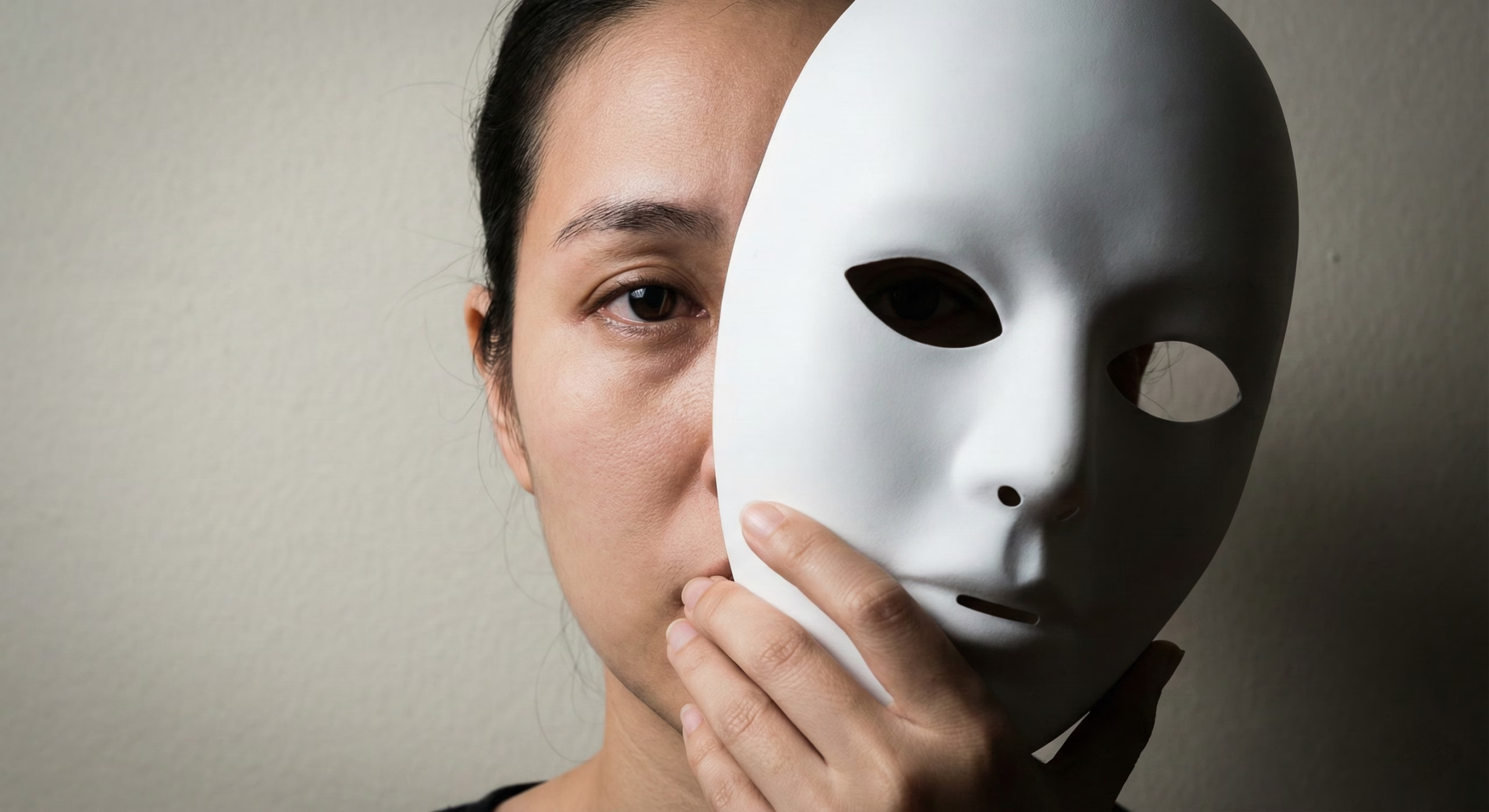
Low self esteem rarely appears overnight. It forms slowly through everyday experiences that teach the mind how to see itself. Most people are not born doubting their worth. That belief is learned. Psychology helps explain how ordinary moments repeated over time can shape a lasting inner narrative. Childhood plays a powerful role. Early on the … Read more


What Is the Psychology of Self-Esteem?

Self esteem is the quiet voice in your head that answers one simple question. How do I feel about myself? That voice is not loud or dramatic most of the time. It shows up in small moments like how you react to mistakes how comfortable you feel speaking up or how easily you accept kindness. … Read more

Why Do People Seek Validation?

Everyone seeks validation at some point. It might show up as checking a message twice to see if someone replied, feeling uplifted by a compliment, or feeling uneasy when efforts go unnoticed. Psychology sees this need not as weakness but as something deeply human. Wanting validation is rooted in how the mind learns safety connection … Read more

How Does Shame Affect Behavior?

Shame is one of the most powerful emotions a person can experience, yet it often operates in silence. It does not announce itself loudly the way anger or fear might. Instead it settles in quietly and whispers messages about who you are and whether you belong. Psychology views shame as more than a feeling. It … Read more

What Is the Psychology of Guilt?

Guilt is one of those emotions that can quietly take over the mind. It shows up after something said something done or sometimes something not done at all. You might feel a heavy knot in your chest or replay a moment again and again, wishing it had gone differently. Psychology sees guilt not as a … Read more

What Happens in the Brain When We Lie?

Lying often feels like a moral issue, but psychology looks at it as a mental process. When you lie, your brain does not simply replace truth with fiction. It works harder, faster, and under more pressure. This is why lying can feel tense even when the lie seems small. The moment a lie begins, the … Read more

Why Do People Lie?

Most people think of lying as rare or extreme. Psychology tells a different story. Lying is surprisingly common and often subtle. It shows up in small ways like exaggerating politeness hiding feelings or avoiding conflict. This does not mean people are bad. It means the human mind sometimes chooses protection over truth. Lying Often Begins … Read more

What Is the Psychology of Trust?

Trust starts with a simple emotional experience. Feeling safe with someone. Psychology explains that trust is not only a decision made by the mind. It is a state felt by the nervous system. When you trust someone your body relaxes. You feel less guarded. Your mind expects care rather than harm. This sense of safety … Read more

How Does Rejection Affect Self-Esteem?

Rejection often lands like a direct message about worth. A missed reply a declined opportunity or a relationship ending can quickly turn into a story about who you are. Psychology explains that the mind is wired to personalize rejection because belonging has always mattered for survival. The brain asks a simple question when rejection appears. … Read more

Why Do Breakups Hurt So Much?

Breakups do not only hurt emotionally. Many people feel tightness in the chest heaviness in the body or constant fatigue. Psychology explains that emotional pain activates the same brain areas as physical pain. The brain treats loss of connection as a serious threat. This is why heartbreak feels overwhelming and impossible to ignore. Attachment Makes … Read more