
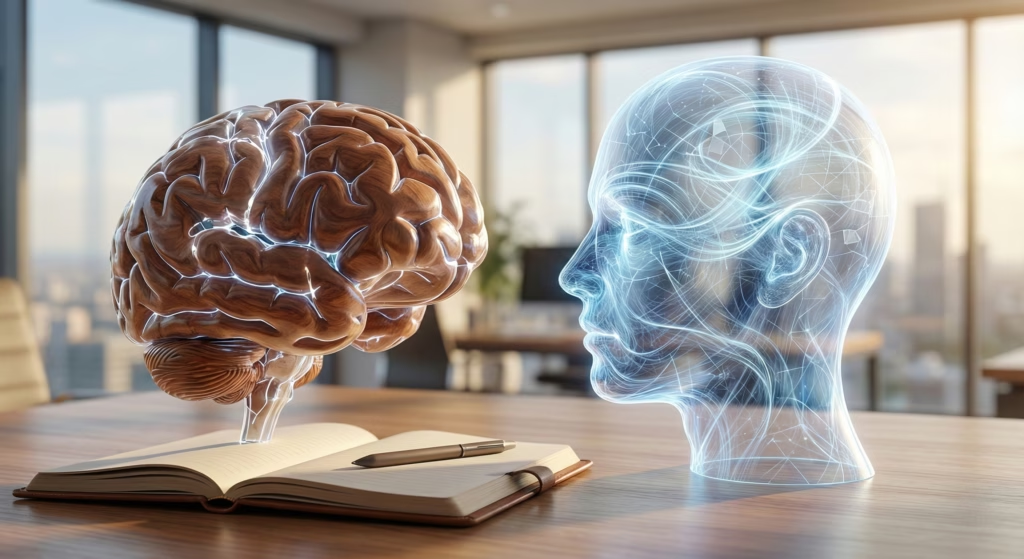
People often use the words mind and brain as if they mean the same thing. In everyday conversation, that makes sense. In psychology, however, they refer to two closely connected but very different things. Understanding this difference helps you see yourself more clearly and appreciate how thoughts, emotions, and actions come together.
The brain is something you can touch and measure. The mind is something you experience. One is physical. The other is psychological. Together, they shape who you are.
The Brain Is the Physical Control Center
The brain is an organ, just like the heart or lungs. It sits inside your skull, made up of billions of nerve cells that communicate through electrical and chemical signals. These signals control movement, breathing, speech, and countless other functions that keep you alive.
When you feel pain, the brain processes it. When you see a color or hear a sound, the brain translates those signals. Injuries, illnesses, or chemical changes in the brain can affect mood, memory, and behavior. This physical side of human experience is what neuroscience and biology focus on.
The Mind Is the World of Experience
The mind refers to your inner experience. It includes thoughts, emotions, memories, beliefs, imagination, and awareness. You cannot point to the mind on a scan, yet you live in it every moment. The mind is where meaning is made.
When you remember a childhood moment, worry about the future, or feel joy during a conversation, that is the mind at work. The mind asks questions, creates stories, and reflects on itself. Psychology focuses on understanding this inner world and how it influences behavior.
How the Brain and Mind Work Together
The brain and mind are deeply connected. The brain provides the structure and processes that make mental experiences possible. The mind is how those processes are felt and interpreted.
When your brain activity changes, your mental experience often changes too. Stress can alter brain chemistry and affect how clearly you think. Therapy can change patterns of thinking, which in turn can change brain activity over time. This ongoing interaction shows that the relationship goes both ways.
Why the Difference Matters
Understanding the difference between mind and brain helps reduce confusion and stigma. Mental struggles are not signs of weakness or imagination. They involve real experiences influenced by brain function, life history, and environment.
This distinction also explains why different approaches can help. Medication may support the brain by adjusting chemistry. Therapy supports the mind by reshaping thoughts, emotions, and understanding. Together, they often work more effectively than either alone.
Everyday Examples Bring the Difference to Life
Imagine feeling nervous before an important conversation. The brain may activate stress responses, increasing heart rate and alertness. The mind interprets this as fear, anticipation, or excitement depending on past experiences and current thoughts.
Consider learning a new skill. The brain forms new connections through practice. The mind experiences confidence, frustration, or curiosity along the way. Both are involved, yet they play different roles.
A Helpful Way to Think About It
One simple way to understand the difference is to think of the brain as the hardware and the mind as the software. The hardware allows everything to run. The software determines how information is processed and experienced.
This comparison is not perfect, but it highlights an important idea. You can influence the software through awareness, learning, and reflection. Over time, those changes can even shape the hardware.
Understanding Yourself With More Compassion
When you understand the difference between mind and brain, self compassion grows. You stop blaming yourself for having difficult thoughts or emotions. You begin to see them as part of a complex system that is always adapting.
Psychology helps bridge the gap between the physical brain and the lived experience of the mind. Learning how they work together offers clarity, hope, and a deeper understanding of what it means to be human.