
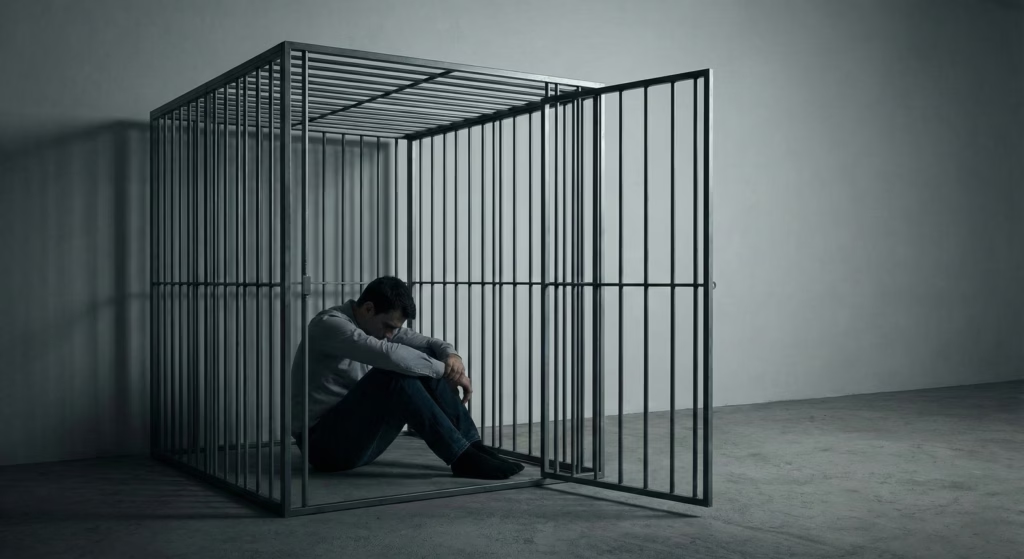
Learned helplessness is one of those psychological ideas that sounds technical at first, yet feels painfully familiar once you understand it. It describes a state where a person learns, over time, that their actions do not seem to matter. After repeated experiences of failure, loss of control, or disappointment, the mind slowly gives up trying. Even when change becomes possible, the person may not see it. The door is unlocked, yet they do not reach for the handle.
This concept helps explain why some people stay stuck in situations that harm them. It sheds light on why motivation disappears, why hope fades, and why effort can feel pointless. Learned helplessness is not about weakness or laziness. It is about the brain adapting to protect itself from pain.
Imagine touching a hot stove again and again. After enough burns, your body pulls back automatically. Learned helplessness works in a similar way, except the pain is emotional rather than physical. The mind learns that effort leads to hurt, so it shuts effort down.
The idea of learned helplessness first emerged from observations about behavior and control. When individuals experience situations where nothing they do changes the outcome, the brain starts to believe that action is useless. This belief does not stay confined to one situation. It spreads quietly into other areas of life.
Once learned helplessness takes hold, people may stop trying even when success is possible. The mind expects failure before it happens. This expectation shapes behavior, emotions, and even physical responses.
One of the most striking parts of learned helplessness is how invisible it can be. From the outside, it may look like apathy or lack of ambition. Inside, it feels like exhaustion mixed with quiet despair. The person often wants things to improve but feels unable to make them change.
Control is at the heart of learned helplessness. Humans have a deep psychological need to feel that their actions matter. When that sense of control is taken away repeatedly, the mind adapts by lowering expectations. This adaptation reduces emotional pain in the short term but creates long term problems.
Early life experiences play a powerful role in shaping learned helplessness. Children who grow up in unpredictable or harsh environments often learn that effort does not lead to safety or reward. If a child tries to please a caregiver and still faces rejection or punishment, the brain learns that trying is risky. Over time, giving up feels safer.
School environments can also contribute. When students repeatedly fail despite effort, they may stop trying altogether. The message the brain absorbs is not that the strategy needs changing, but that ability is fixed. This belief seeps into identity.
Learned helplessness is closely linked to depression. People experiencing depression often feel powerless, hopeless, and unmotivated. Their mind has learned that nothing they do makes a difference. Energy drains away because effort feels pointless.
Anxiety also plays a role. When attempts to cope or escape fail, anxiety can turn into resignation. The person stops resisting stressors because resistance feels useless.
Learned helplessness affects thinking patterns. Thoughts become rigid and pessimistic. The mind says things like nothing will change or there is no point trying. These thoughts feel factual rather than emotional, which makes them harder to challenge.
Behavior changes follow these thoughts. People withdraw, procrastinate, or avoid challenges. They may stay in unhealthy relationships, unsatisfying jobs, or harmful routines because the brain expects no better outcome elsewhere.
Emotions shift as well. Hope fades first. Then curiosity disappears. Eventually, even desire becomes muted. Life feels flat rather than painful. This emotional numbness is one of the mind’s ways of coping.
The body responds too. Learned helplessness can affect energy levels, sleep, and immune function. Chronic stress without control exhausts the nervous system. The body remains in a low grade state of shutdown.
One of the most troubling aspects of learned helplessness is how it maintains itself. When people stop trying, they stop gathering evidence that change is possible. The belief that effort is useless never gets challenged. The cycle continues quietly.
Social environments can reinforce learned helplessness. When people are blamed for circumstances beyond their control, shame grows. Shame tells the person that failure reflects who they are, not what happened. This belief deepens helplessness.
Workplaces can unintentionally foster learned helplessness. Micromanagement, unclear expectations, or constant criticism teach employees that initiative is risky. Over time, people do only what they are told or disengage entirely.
Relationships can become breeding grounds for helplessness too. When one partner dismisses or undermines the other’s needs repeatedly, the unheard partner may stop expressing themselves. Silence replaces effort.
Learned helplessness also explains why some people resist help. When past attempts to seek support failed, the brain expects rejection or disappointment. Avoidance feels safer than hoping again.
Technology and modern life can amplify helplessness. Constant comparison, overwhelming information, and lack of clear feedback confuse the brain. When effort does not lead to visible progress, motivation drops.
It is important to understand that learned helplessness is learned. This means it can be unlearned. The brain is flexible, even after years of resignation.
Recovery starts with restoring a sense of control. Small, manageable actions matter more than dramatic changes. Each small success sends a new message to the brain. Effort can lead to outcome.
Awareness is the first step. Naming learned helplessness removes some of its power. The person realizes that their feelings are responses to experience, not truths about their worth or ability.
Changing the environment helps too. Supportive spaces where effort is encouraged and mistakes are treated as learning experiences rebuild confidence.
Language plays a role. Shifting from always and never to sometimes and maybe opens mental space. The brain becomes more curious when absolutes soften.
Self compassion is essential. Blaming oneself for helplessness only deepens it. Gentleness creates safety, and safety allows effort to return.
Therapeutic approaches often focus on reconnecting actions with outcomes. When people see direct links between what they do and what happens, motivation slowly returns.
Learning new skills builds confidence. Each skill mastered becomes evidence that growth is possible.
Celebrating effort rather than outcome retrains the brain. Success becomes about showing up rather than winning.
Relationships that offer consistency and respect can heal learned helplessness. Feeling seen and heard restores trust in connection.
Rest is not laziness in this process. A burned out nervous system cannot relearn hope without recovery.
Time matters. Learned helplessness develops slowly, and healing takes patience. Progress may feel uneven. That does not mean it is not happening.
Understanding learned helplessness changes how we view others too. What looks like giving up may actually be deep fatigue. Empathy replaces judgment.
Parents, teachers, and leaders can prevent learned helplessness by offering choice, autonomy, and encouragement. Feeling capable grows when people are trusted.
Failure itself does not cause learned helplessness. Failure without support does. Context matters more than outcome.
Hope returns when the mind experiences control again. Even tiny moments of agency count.
Learned helplessness is not a life sentence. It is a learned response to pain and unpredictability. Responses can change when conditions change.
At its core, learned helplessness reminds us how deeply humans need to feel that they matter. Effort is an expression of hope. When hope is crushed repeatedly, effort retreats.
Restoring hope begins with believing that change is possible, even if that belief feels fragile at first. Every time a person chooses to try again, no matter how small the step, the brain learns something new.
Over time, the quiet voice that once said nothing will change begins to soften. In its place, another voice appears. This one says maybe this time will be different. That voice is where healing begins.