
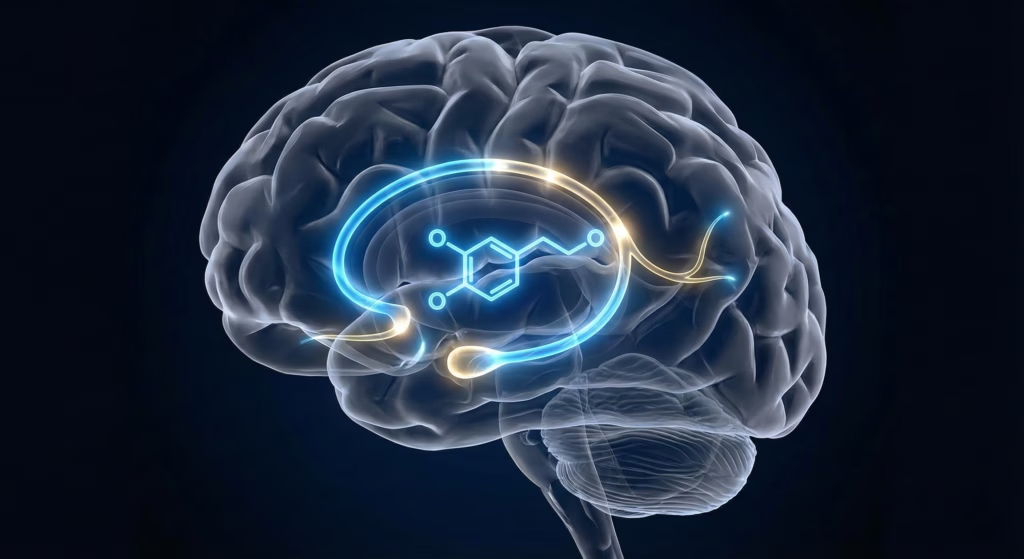
Dopamine often gets described as the pleasure chemical, but that description only scratches the surface. Dopamine is not just about feeling good. It is about learning what matters, deciding what to pursue, and shaping how we move through the world. Every time you feel motivated to get out of bed, check your phone, chase a goal, or repeat a habit, dopamine is involved in the background, quietly nudging your behavior in certain directions.
Think about a moment when you felt excited about something before it even happened. Maybe it was waiting for a message, planning a trip, or anticipating praise. That feeling of anticipation is dopamine at work. It rises not when the reward arrives, but when your brain predicts that something rewarding might happen. This prediction is powerful because it drives action. It pushes you to move toward something before you fully know how it will turn out.
The brain is constantly learning from experience. Dopamine helps mark experiences as important. When something turns out better than expected, dopamine activity increases. When something turns out worse than expected, dopamine activity drops. This difference teaches the brain what to repeat and what to avoid. Over time your behavior shifts without you consciously deciding to change it.
This learning process explains why habits form so easily. When a behavior leads to a positive outcome, even a small one, dopamine helps lock that pattern in place. The brain remembers the sequence of actions and the context in which they happened. Next time a similar situation appears, the brain suggests the same behavior again. This happens whether the habit is helpful or harmful.
Dopamine does not care about long term consequences. It focuses on immediate learning signals. This is why behaviors that offer quick rewards can become so powerful. Scrolling through social media, eating sugary food, gambling, or checking notifications all deliver unpredictable rewards. Uncertainty actually increases dopamine response. The brain becomes highly engaged because it does not know when the next reward will appear.
Motivation is deeply tied to dopamine. When dopamine levels are balanced, effort feels worthwhile. Tasks seem doable. Goals feel attractive. When dopamine activity is low, motivation drops. People describe feeling flat, bored, or stuck. This is not laziness. It is a change in how the brain values effort and reward.
Depression provides a clear example of dopamine’s role in behavior. Many people with depression report that things they once enjoyed no longer feel rewarding. The brain’s reward system becomes less responsive. Activities that used to spark interest no longer produce the same dopamine signals. As a result people withdraw, not because they do not care, but because their brain is not reinforcing engagement.
Dopamine also influences decision making. It helps weigh potential rewards against effort. When dopamine signaling is strong, people are more willing to work toward goals. When signaling is weak, even small tasks feel overwhelming. This affects everything from career choices to daily routines.
The relationship between dopamine and pleasure is often misunderstood. Dopamine does not create pleasure itself. Pleasure involves other brain systems. Dopamine is more about wanting than liking. It fuels desire, curiosity, and pursuit. This is why someone can strongly crave something even if it no longer brings much enjoyment. The wanting system keeps firing even when the liking system fades.
Addiction highlights this difference clearly. Substances or behaviors that repeatedly spike dopamine can train the brain to prioritize them above all else. Over time the brain becomes hypersensitive to cues related to the addiction and less responsive to natural rewards. The person may feel driven to seek the substance even when it no longer feels good. Behavior becomes compulsive rather than joyful.
Dopamine is also involved in learning from mistakes. When outcomes do not match expectations, dopamine activity adjusts. This helps the brain update its predictions. If a behavior no longer leads to reward, motivation to repeat it decreases. This learning process helps people adapt to changing environments.
Stress can disrupt dopamine balance. Chronic stress floods the brain with signals that prioritize survival over growth. Over time this can blunt dopamine responses. Motivation decreases. Pleasure fades. People may turn to intense stimuli to feel something again. This is one reason stress increases vulnerability to addiction and burnout.
Sleep plays a role as well. Lack of sleep alters dopamine receptors, making the brain more sensitive to reward cues and less capable of self control. After poor sleep people are more likely to seek quick rewards and less able to resist impulses. Behavior shifts not because values change but because brain chemistry does.
Social connection strongly influences dopamine. Positive social interactions activate reward circuits. Feeling seen, appreciated, or included reinforces behaviors that maintain relationships. This is why praise can be motivating and rejection can feel deeply painful. The brain treats social rewards as essential.
Dopamine also shapes curiosity. When something new or surprising appears, dopamine rises. This motivates exploration and learning. Curiosity keeps the brain flexible and engaged. Environments that offer novelty without overwhelming stress tend to support healthy dopamine function.
Modern life presents unique challenges for dopamine regulation. Endless streams of information and stimulation constantly trigger reward predictions. The brain stays in a state of anticipation. Over time this can reduce sensitivity. Ordinary experiences may feel less engaging compared to digital rewards designed to capture attention.
This does not mean dopamine is the enemy. Dopamine is essential for growth creativity and resilience. The key lies in balance. When dopamine signals align with meaningful goals, behavior becomes purposeful. When signals are hijacked by constant stimulation, behavior becomes reactive.
Self control is not simply about willpower. It involves the interaction between dopamine driven impulses and brain regions responsible for planning and regulation. When regulation systems are tired stressed or underdeveloped, dopamine driven urges dominate. Understanding this reduces self blame and opens space for strategy.
Small changes in behavior can reshape dopamine patterns. Activities that combine effort with meaning gradually rebuild healthy reward sensitivity. Exercise learning creative work and deep connection provide slower but more sustainable dopamine responses. The brain learns that effort leads to satisfaction.
Patience is important because dopamine systems adapt gradually. Quick fixes often backfire. Consistency matters more than intensity. Repeating behaviors that align with values slowly retrains the brain’s expectations.
Mindfulness helps by creating awareness of urges without immediately acting on them. This pauses the automatic dopamine driven loop. Over time the brain learns that urges do not always require action. Choice expands.
Understanding dopamine also changes how we view success and failure. Motivation fluctuates not because character changes but because brain states change. Compassion toward oneself improves resilience. Harsh self judgment increases stress and disrupts reward systems further.
Children and adolescents experience heightened dopamine sensitivity. Their brains are especially responsive to reward and novelty. This supports learning but also increases risk taking. Guidance and structure help channel dopamine toward growth rather than harm.
Aging brings changes as well. Dopamine activity naturally declines over time. This does not mean joy disappears. It means motivation may shift toward meaning connection and depth rather than novelty. Behavior adapts as values evolve.
Dopamine works best in partnership with other brain systems. Emotion memory reasoning and social awareness all interact with reward signals. Behavior emerges from this complex dance rather than a single chemical.
When people understand how dopamine influences behavior, they often feel relief. Struggles make more sense. Patterns become understandable rather than mysterious. Change feels possible rather than overwhelming.
Dopamine does not control you, but it influences you constantly. Awareness restores choice. By shaping environments habits and expectations, you can work with your brain rather than against it.
Every time you pause before reacting, choose effort over ease, or seek meaning over instant reward, you are gently guiding your dopamine system. These moments accumulate. Behavior shifts. Motivation returns.
Dopamine is not about chasing pleasure endlessly. It is about learning what matters. When what matters aligns with who you want to become, behavior follows naturally.
Understanding dopamine is not about optimization or perfection. It is about respect for how the mind works. With that respect comes patience, curiosity, and the ability to shape a life driven by intention rather than impulse.