
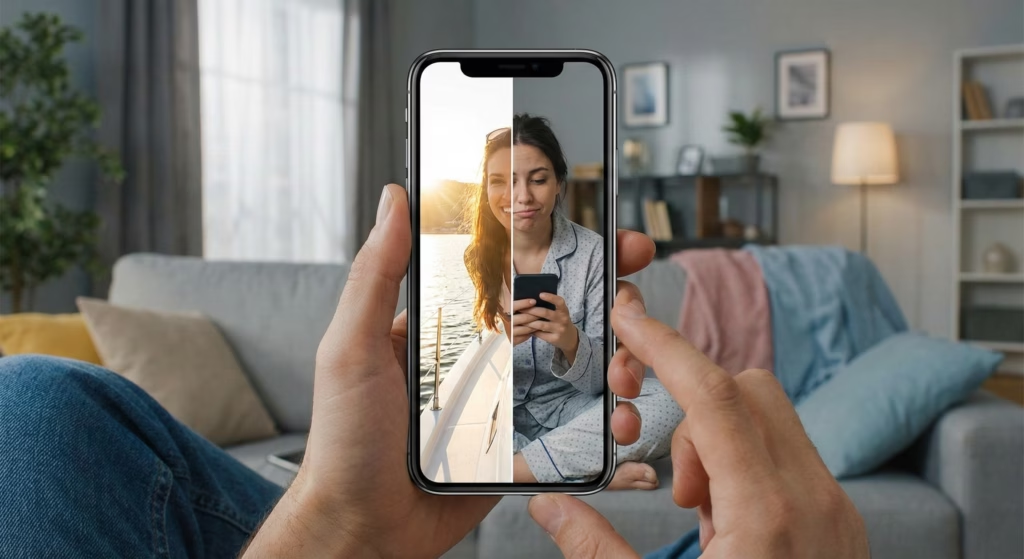
Comparison is something almost everyone does, often without realizing it. You notice someone your age achieving something you want. You scroll past a life that looks happier or more successful than yours. You hear a friend’s story and instantly measure it against your own. Psychology explains that this habit is not a flaw in character. It is a deeply human tendency rooted in how the mind learns identity and belonging.
From the earliest stages of life, the brain learns through observation. As a child, you looked to others to understand what was normal, acceptable, or possible. You learned language by copying. You learned behavior by watching. Comparison was not about judgment back then. It was about learning. The brain still uses this same mechanism in adulthood, even though life has become far more complex.
The mind compares because it wants information. It asks questions like Where do I stand? Am I doing okay? Am I safe? In ancient times, knowing your position within a group was essential for survival. Belonging meant protection. Being excluded meant danger. Although modern life no longer works the same way, the nervous system still carries this old wiring.
Comparison also helps shape identity. You understand who you are partly by noticing who you are not. Seeing differences and similarities helps the mind build a sense of self. This process can be healthy when it inspires growth or clarity. It becomes painful when it turns into constant self judgment.
Self worth plays a major role here. When self esteem is steady, comparison feels informative rather than threatening. You might admire someone’s success without feeling diminished. When self esteem is fragile, comparison becomes harsh. Every difference feels like evidence of inadequacy. Psychology shows that the same comparison can feel motivating or crushing depending on inner stability.
Culture strongly influences how much people compare. Modern society emphasizes achievement visibility and constant progress. Success is displayed openly while struggle is hidden. The brain absorbs these messages daily. Without context, it assumes others are doing better and feeling happier. This fuels comparison even when it is inaccurate.
Social media intensifies this effect dramatically. The mind evolved to compare itself with a small group of familiar people. Now it compares itself with hundreds or thousands of curated lives. Photos achievements and highlights are presented without the ordinary struggles behind them. The brain does not naturally filter this. It treats the images as reality and adjusts self evaluation accordingly.
Comparison often increases during times of uncertainty. When life feels unclear, the mind looks outward for guidance. It asks others’ lives for clues about what it should be doing. During transitions such as career changes relationships or personal growth, comparison spikes because the internal compass feels shaky.
Emotionally, comparison is tied to fear and hope. Fear says I might be falling behind. Hope says maybe I can be like that too. These emotions pull attention outward. The mind becomes focused on measuring rather than experiencing. Life turns into a scoreboard rather than a journey.
Psychology also explains that comparison is closely linked to motivation. Seeing others succeed can activate desire and effort. This is called upward comparison. It can inspire growth when the goal feels attainable. It becomes damaging when the gap feels overwhelming. The mind then shifts from motivation to discouragement.
Downward comparison also exists. This happens when people compare themselves to those they perceive as worse off. It can temporarily boost self esteem. While this may feel comforting, it does not build lasting confidence. True self worth does not need someone else to be lower.
Comparison becomes harmful when it replaces self reference. Instead of asking Am I growing according to my values? the question becomes Am I doing better or worse than others? Psychology shows that this shift disconnects people from their own goals. Satisfaction becomes dependent on external rankings rather than internal meaning.
Early experiences strongly shape comparison habits. Children who were frequently compared to siblings or peers may internalize the belief that value is relative. Praise based on being better than others teaches the mind to seek superiority rather than mastery. As adults, these individuals may feel constant pressure to measure up.
Trauma and emotional neglect can also increase comparison. When internal validation is lacking, the mind looks outward for reassurance. Others become mirrors for worth. If those mirrors seem brighter, self doubt grows.
The inner critic often uses comparison as a tool. It points out what others are doing and highlights perceived shortcomings. This voice sounds logical but it is often rooted in fear. It believes that pressure will create improvement. Psychology shows that self criticism actually reduces motivation and increases anxiety.
Comparison affects relationships too. It can create envy resentment or withdrawal. Instead of connection, the mind feels competition. This is painful because humans deeply desire belonging. Comparison can quietly undermine that need by turning others into benchmarks instead of companions.
Breaking free from harmful comparison does not mean stopping comparison entirely. Psychology suggests changing how and why it happens. Awareness is the first step. Noticing comparison without judgment reduces its automatic power.
Shifting focus inward helps. When goals are based on personal values rather than external standards, comparison loses intensity. The mind begins measuring progress against past self rather than others. This builds a sense of continuity and meaning.
Gratitude also plays a role. When attention includes what is present and working, comparison softens. The brain cannot easily hold appreciation and inadequacy at the same time. This does not mean ignoring ambition. It means grounding ambition in reality rather than scarcity.
Self compassion is essential. Comparison often arises during moments of vulnerability. Responding with kindness rather than criticism calms the nervous system. Safety reduces the need to compare.
Psychology reminds us that everyone compares at times. The goal is not perfection. The goal is balance. Comparison can inform inspire and guide when used gently. It harms when it becomes constant and self defining.
Understanding why you compare helps you regain choice. The habit loses its grip when it is seen clearly. Instead of asking Why am I not like them? the question becomes What do I need right now? That shift brings attention back home.
People compare themselves to others because they are human. The mind seeks understanding safety and direction. When comparison is guided by curiosity rather than judgment it becomes less painful. Growth then comes from alignment rather than competition. Life feels less like a race and more like a path that unfolds at its own pace.