
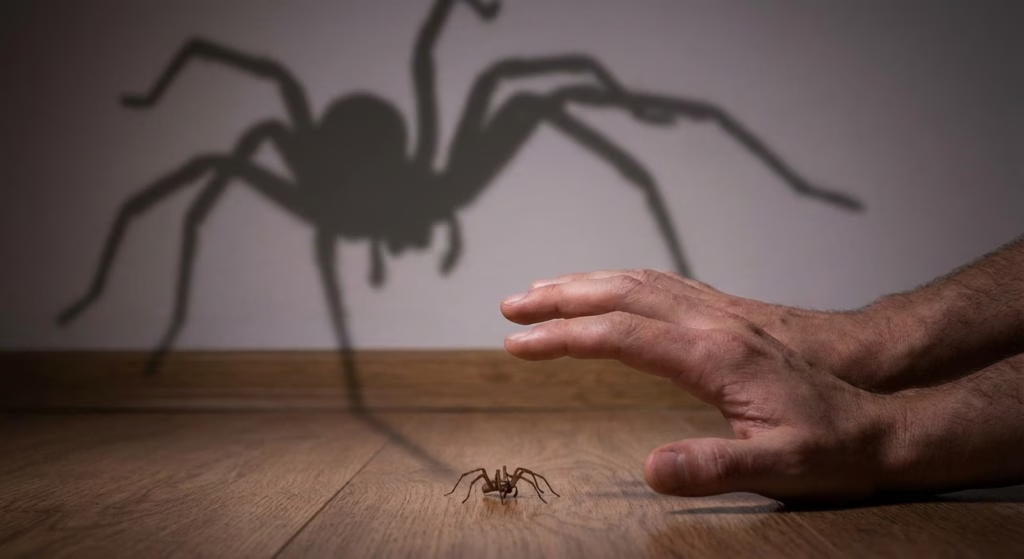
Phobias often begin with a simple fear. Fear itself is not a problem. Psychology explains that fear is a protective response meant to keep people safe from danger. When something feels threatening, the mind reacts quickly to protect the body.
Most fears fade when the threat passes. Phobias develop when a fear stays long after danger is gone or grows stronger with time.
Early Experiences Leave Strong Impressions
Many phobias trace back to early experiences. A frightening event involving an object situation or animal can leave a deep emotional mark. The mind links the fear to that specific trigger.
Psychology shows that the brain remembers emotional experiences more strongly than neutral ones. Even a single intense moment can shape future reactions, especially in childhood when the brain is still learning what is safe.
Learning Happens Through Association
Phobias often form through association. If fear appears during a particular situation, the mind connects the two. Over time the situation alone can trigger fear even without real danger.
Psychology explains this as learned fear. The brain learns quickly when emotions are involved. This learning is meant to protect but it can become overly sensitive.
Observation Can Create Fear
Phobias do not always come from personal experience. Watching others react with fear can shape the mind. Children especially learn by observing caregivers and peers.
If a child repeatedly sees someone panic around a certain object or situation, the brain may adopt that fear as its own. Psychology shows that social learning plays a strong role in fear development.
Avoidance Strengthens Phobias
Once fear appears, avoidance often follows. Avoiding the feared object brings relief. The mind learns that avoidance reduces discomfort.
Psychology explains that this relief reinforces the fear. The brain never gets the chance to learn that the situation may be safe. Over time the fear grows stronger and more automatic.
The Mind Exaggerates Threat Over Time
As a phobia develops, the mind may exaggerate danger. Thoughts become more extreme. The feared object feels more threatening than it truly is.
Psychology shows that anxious thinking feeds fear. The mind focuses on worst case scenarios and ignores neutral or safe experiences. This mental pattern deepens the phobia.
The Body Learns the Fear Too
Phobias affect the body as much as the mind. Physical reactions such as a racing heart or dizziness become familiar responses.
Over time the body reacts faster than conscious thought. Psychology explains that the nervous system learns to respond automatically. This makes phobias feel uncontrollable even when the person understands the fear is irrational.
Phobias Can Generalize
Fear can spread beyond the original trigger. A fear of one dog may grow into fear of all dogs. A fear of one elevator may turn into fear of enclosed spaces.
Psychology calls this generalization. The mind widens the danger zone to stay safe. This expansion often limits daily life and increases distress.
Time Alone Does Not Always Heal Phobias
Some fears fade naturally. Others remain because the mind never receives new information. Avoidance prevents learning that safety is possible.
Psychology explains that phobias persist when fear remains unchallenged. Understanding this helps reduce frustration and self blame.
Awareness Opens the Door to Change
Understanding how phobias develop brings compassion. Phobias are not chosen. They are learned responses shaped by experience emotion and protection.
Psychology shows that the mind can also learn new responses. With patience support and gradual exposure fear can soften. Over time the brain updates its understanding and safety begins to feel possible again.